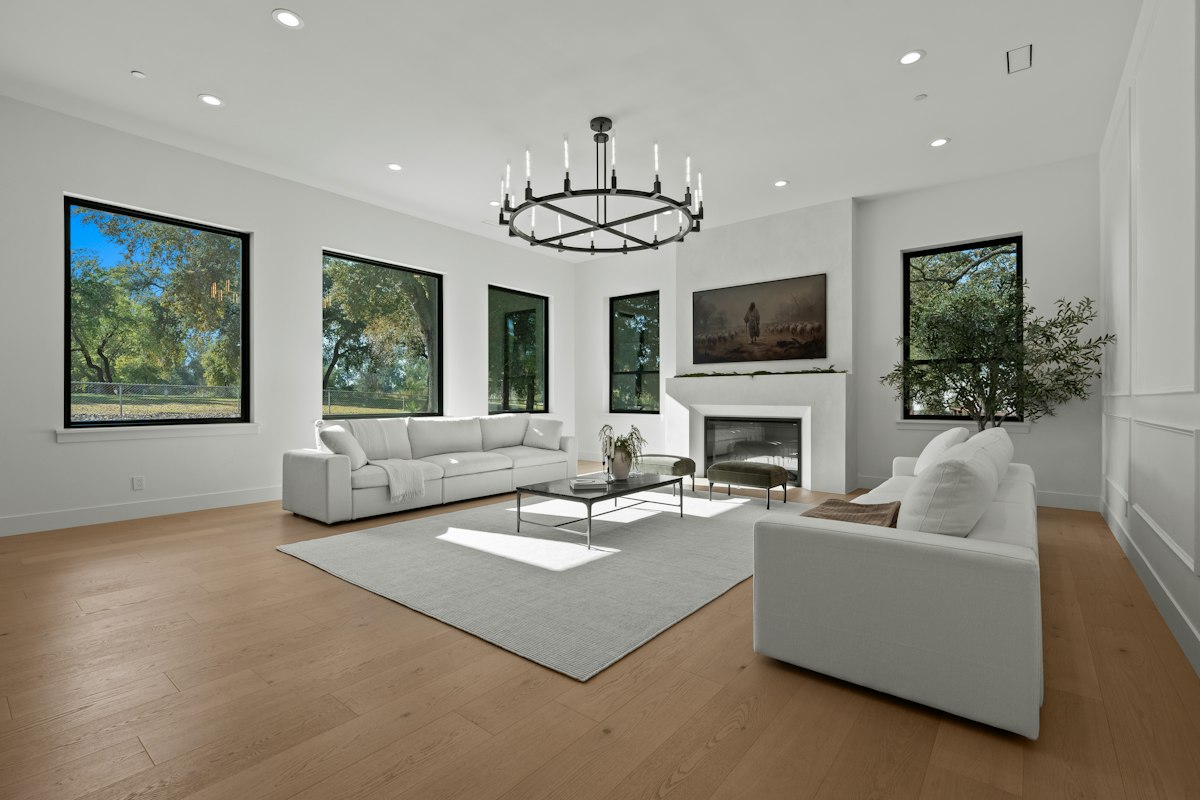
Engineered Wood Flooring Cost: Real-World Pricing, Labor, and Hidden Expenses
Planning a flooring renovation brings you face to face with dozens of choices, but few balance beauty and practicality quite like engineered hardwood. Homeowners love the authentic timber surface paired with an engineered core that resists moisture and humidity swings. Yet, figuring out what you will actually spend per square foot often feels like aiming at a moving target.
Material prices alone tell only half the story. The total installed price swings dramatically based on the species you select, the thickness of the top veneer, your subfloor condition, and the installation technique your contractor uses. A quote that starts at an attractive rate can double once adhesive, underlayment, leveling compounds, and transitions enter the equation.
Related posts
Best Vinyl Flooring for Hospital Environments: Performance, Hygiene, and Cost Analysis
Hospital flooring endures challenges that would destroy standard commercial surfaces within weeks. Heavy hospital beds, portable X-ray machines,...
Read more →Rubber Mat Flooring Price: Complete Cost Breakdown and Buyer Handbook
Investing in protective flooring often comes down to balancing durability against upfront cost. Whether you are outfitting a...
Read more →Modern Luxury Home Decor: Principles of Refined Interior Styling
Modern luxury home decor is no longer defined by gilded moldings, heavy brocades, or ostentatious brand logos displayed...
Read more →
Best Raised Floor Systems: Engineering, Load Ratings, and Selection Criteria
Selecting the right access floor system determines how effectively your facility manages power distribution, structured cabling, and thermal...
Read more →Understanding real-world numbers helps you avoid budget surprises and prevent contractor sticker shock. Whether you want to cover a small home office or floor an entire multi-level residence, knowing how materials and labor break down puts you in control of your project budget.
Here is an honest breakdown of current pricing, what drives costs higher or lower, overlooked job-site expenses, and practical ways to get lasting value out of your investment.
Key takeaways
- Average total cost: Expect to spend between $8 and $22 per square foot for materials and professional installation combined.
- Veneer thickness dictates value: Thicker wear layers (3mm to 6mm) cost significantly more upfront but allow future refinishing, extending the floor's lifespan.
- Installation method matters: Floating floor installations represent the lowest labor expense, whereas glue-down applications command premium labor and adhesive costs.
- Budget for job-site prep: Subfloor repairs, leveling, baseboards, and waste factor generally add 15% to 25% on top of raw material quotes.
Average engineered wood flooring cost per square foot
When calculating your budget, split your estimate into two main buckets: materials and labor. On average, homeowners pay approximately $12 to $16 per square foot for a complete professional installation. However, the full spectrum stretches from basic budget products to high-end architectural planks.
Basic budget tier ($4 to $8 per square foot total)
At the economy level, raw plank materials run between $2.50 and $4.50 per square foot, with basic floating installation adding $2.50 to $3.50. Floors in this price band feature thin wear layers (under 2mm), high-density fiberboard (HDF) cores, standard 3-inch widths, and synthetic-looking surface textures. These work well for rental properties or temporary updates, but they cannot be sanded or refinished down the road.
Mid-range tier ($9 to $16 per square foot total)
Most residential projects fall comfortably into this bracket. Planks typically cost $5 to $9 per square foot, while professional installation ranges from $4 to $7 per square foot. Here, you get genuine multi-ply plywood cores, wear layers measuring 2mm to 4mm, wider 5-inch planks, and popular domestic hardwoods like White Oak, Red Oak, and Hickory with durable aluminum oxide factory finishes.
Premium custom tier ($17 to $25+ per square foot total)
High-end architectural flooring ranges from $10 to $18+ per square foot for planks alone, with meticulous glue-down or pattern labor adding $7 to $12 per square foot. Products in this category feature thick dry-sawn wear layers (up to 6mm), cross-lapped Baltic birch cores, wide planks reaching 7 to 10 inches, long board lengths, and specialty finishes like natural hard-wax oils or reactive wire-brushing.
Primary factors that influence material costs
Why do two boxes of engineered flooring that look similar on a showroom shelf carry wildly different price tags? The difference lies in engineering specifications, harvest yields, and manufacturing craftsmanship.
Veneer thickness and cut method
The top layer of natural hardwood, known as the wear layer or lamella, is the single biggest pricing factor. Rotary-peeled veneers are boiled and peeled in sheets, yielding a plywood-like grain pattern at a lower production cost. Sliced veneers give a more authentic grain at a moderate price. Dry-sawn veneers mimic the cut of traditional solid lumber, producing beautiful vertical cathedral grain patterns, but this method generates more sawdust waste, driving up the retail cost.
Thickness ranges from 1mm up to 6mm. A 1mm wear layer will last 10 to 15 years but cannot be sanded. A 4mm to 6mm dry-sawn wear layer can be sanded and refinished two to four times, giving the floor a lifespan comparable to solid hardwood.
Wood species
Domestic hardwoods like Red Oak, White Oak, Ash, and Maple remain relatively affordable because supply chains are well established in North America. Walnut carries a premium due to limited timber supply. Exotic hardwoods like Brazilian Cherry, Teak, and Tigerwood push costs even higher due to import tariffs, transport logistics, and raw material hardness, which wears down tooling faster during manufacturing.
Core construction quality
The stability of engineered wood comes from its structural core. Entry-level brands use high-density fiberboard (HDF) or medium-density fiberboard (MDF). While dimensionally uniform, fiberboard swells irreparably if exposed to standing water. Mid-to-high-end boards use five to eleven alternating layers of void-free marine-grade plywood or Baltic birch. Multi-ply cores resist moisture shifts and structural cupping, justifying a higher purchase price.
Plank width and length
Standard narrow strips (3 inches wide) come from smaller trees and yield higher board volume from every log, keeping prices low. Wide planks measuring 7 to 9 inches require massive, mature logs and careful drying processes to prevent warping. Similarly, premium boxes contain random lengths running up to seven or eight feet, whereas cheaper boxes are packed with short two-to-three-foot boards that create a busy, choppy visual pattern across your room.
Labor rates and installation methods
Labor charges depend on the installation technique your space demands. Contractors evaluate your subfloor type, moisture levels, and the manufacturer's warranty guidelines before recommending one of three methods.
Floating installation ($2.50 to $4.50 per square foot)
In a floating floor setup, planks connect to each other using a click-lock tongue-and-groove system or edge glue, resting entirely over an underlayment pad without adhering to the subfloor. This method is fast, clean, and requires fewer specialized tools, making it the most affordable installation option. It works well over concrete slabs and existing hard surfaces.
Nail or staple down ($3.50 to $6.00 per square foot)
Common over plywood subfloors, technicians use pneumatic flooring nailers to drive cleats or heavy-duty staples through the tongue of each board into the subfloor below. This creates a secure, quiet floor with minimal bounce. Labor costs are moderate, though contractors must take care not to crack the tongues of thinner engineered profiles.
Glue-down installation ($4.50 to $8.00 per square foot)
Glue-down installation bonds the flooring directly to the subfloor with specialized urethane adhesive. It is mandatory for thick, wide-plank profiles installed over concrete slabs to prevent hollow sounds and board movement. The adhesive itself adds an extra $0.80 to $1.50 per square foot in material costs, and the labor is messy and physically demanding. However, it delivers the most solid underfoot feel.
Hidden expenses that impact your overall flooring quote
Many remodeling budgets fail because the estimate focuses exclusively on planks and standard labor. When an installer visits your home, they will assess site conditions that frequently require supplementary work.
- Subfloor leveling and prep: Engineered wood requires a flat surface—typically no more than 3/16-inch variance over a 10-foot radius. Grinding down high spots on concrete or pouring self-leveling underlayment adds $1.50 to $4.00 per square foot to affected zones.
- Old floor tear-out and haul-away: Pulling up old carpet costs roughly $1.00 to $1.50 per square foot. Removing glued-down wood or bonded ceramic tile can climb to $3.00 to $5.00 per square foot including landfill disposal fees.
- Underlayment and moisture barriers: A quality acoustic underlayment or 6-mil poly vapor barrier over concrete costs between $0.35 and $1.10 per square foot. Upgraded rubber or cork membranes that reduce sound transmission in condominiums cost even more.
- Molding, transitions, and trim: Matching flush-mount stair nosings, T-moldings, reducers, and quarter-round trim can add $300 to $1,000 to an average home project. Baseboard removal and reinstallation typically runs $1.50 to $2.50 per linear foot.
- Waste factor: Rooms have alcoves, closets, angles, and natural board defects. Always order 10% extra material for straight layouts and 15% extra for herringbone or diagonal patterns.
Comparing engineered wood costs with alternative flooring
How does engineered wood hold up against other popular surfaces when weighing your options? Evaluating initial costs against expected longevity helps clarify the overall value.
Engineered wood vs. solid hardwood
Solid hardwood averages $8 to $15 per square foot for materials and $5 to $10 for installation, placing it neck-and-neck with upper-tier engineered planks. While solid hardwood can be sanded countless times over a century, it cannot be installed directly over concrete slabs or in below-grade basements without building an elevated subfloor system. Engineered wood handles below-grade moisture variations with far less risk of cupping or crowning.
Engineered wood vs. luxury vinyl plank (LVP)
Luxury vinyl plank runs $2.00 to $5.00 per square foot for materials and $2.00 to $3.50 for labor. While vinyl offers complete waterproofing and lower upfront bills, it does not build home equity the way real wood does. Real estate appraisers treat engineered wood as genuine hardwood, which appeals strongly to future buyers.
Practical ways to control your flooring budget
You do not have to sacrifice quality to keep your renovation affordable. A few smart adjustments can trim hundreds of dollars from your invoice.
Handle simple demolition tasks yourself. Tearing up old carpet and removing baseboards requires basic hand tools, pry bars, and elbow grease. Doing this yourself saves hundreds of dollars in labor fees before your installation crew sets foot in the house.
Stick with domestic species like White Oak or Hickory instead of rare exotics. Domestic woods match almost any decor style, resist daily wear, and feature stable pricing because they avoid ocean freight volatility.
Avoid intricate layout patterns like herringbone, chevron, or borders unless your budget has ample breathing room. Pattern installations require up to double the labor hours and generate close to 20% waste from angle cuts.
Finally, measure your rooms accurately and shop for leftover attic stock or discontinued production runs if you are working on a single room. Distributors often discount high-grade overstock inventory by 30% to 50% simply to clear warehouse racks.
Frequently asked questions
How much does it cost to install engineered wood flooring in a 1,000-square-foot house?
For a typical 1,000-square-foot home, the average total cost ranges between $10,000 and $16,000 for materials and installation. A budget-focused project with floating planks might come out closer to $8,000, while a custom, wide-plank glue-down installation with extensive subfloor leveling can reach $20,000 or more.
Can engineered wood flooring be refinished to save on replacement costs later?
Yes, provided the wear layer is thick enough. Floors with a wear layer of 3mm can be lightly sanded and refinished once or twice. Boards with a 4mm to 6mm wear layer can withstand three to four refinishing cycles over several decades. However, products with wear layers under 2mm can only be screened and recoated, not fully sanded.
Is glue-down installation worth the extra cost over floating floors?
Glue-down installation is worth the investment if you want a solid, permanent feel underfoot with zero hollow resonance. It is especially recommended for wide-plank flooring over concrete slabs. If you are renovating a rental or live on a tight budget, a quality floating floor with high-density acoustic underlayment delivers an attractive result for much less money.
Does engineered wood increase home resale value as much as solid hardwood?
In most residential real estate markets, engineered hardwood offers virtually the same return on investment as solid hardwood. Real estate listings categorize quality engineered products as authentic hardwood flooring. Buyers appreciate the visual warmth of genuine timber, making homes sell faster and often commanding higher offers than homes with laminate or vinyl.
What is the average lifespan of engineered wood flooring for the price?
A well-maintained engineered wood floor lasts between 25 and 40 years on average. Premium options featuring thick wear layers and multi-ply Baltic birch cores can last upwards of 50 to 80 years when cared for properly and refinished when surface wear appears.
Conclusion
Investing in engineered wood flooring delivers the authentic warmth and character of genuine hardwood alongside structural stability that solid timber cannot match. While upfront costs range between $8 and $22 per square foot installed, focusing on core construction, wear layer thickness, and proper subfloor preparation ensures your investment pays dividends for decades. Evaluate your home's moisture conditions, set aside a buffer for job-site prep, and collect quotes from multiple licensed installers to secure the best balance of beauty, durability, and budget.